
Vegan Recipe App
T-Shirts for Activists
Newsletter
Ad-Free Browsing
Cookbooks
Petitions
Product Features
Adopt-a-Pet
Get thousands of vegan, allergy-friendly recipes in the palm of your hands today!
X
Get your favorite articles delivered right to your inbox!
X
2.2K Views
12 years ago
We Bet You Never Even Knew These Endangered Animals Existed – But They Need Your Help ASAP!

Most people would say they care about endangered animal species and yet, our ecosystems are currently experiencing mass extinctions! How could this be?! Are we doing all that we can to protect our friends at risk – like the Bornean and Sumatran orangutans, the Sumatran tiger, the Black rhinoceros, the Mountain gorilla, the California Condor, sea turtles, the Emperor penguin, the Giant panda, and other commonly recognized endangered animals?
Besides the philosophy of all living beings having intrinsic value, the roles of many species are crucial to their ecosystems and even to human survival! If we Green Monsters want to see our endangered friends continue to exist, we need to be doing all that we can for their protection. For example, we could be using products that help animals and their environments, changing consumption habits, volunteering with or raising donations for organizations working to benefit endangered animals, and continuing to discover new ways you can help animals and ecosystems.
While we may be focused on helping animals that are known to be in need of aid, what about the endangered species you’ve never even heard of? Recently, exotic species like the pangolin have started to become more publicly exposed. But just as new species can be discovered each day, more species are becoming extinct each day … many without even being noticed by people. While the daily lives of humans might not seem to be affected by loss of species biodiversity, ecosystems and many other animals are affected. And somewhere down the line, when other species are affected, so too will be humans. So let’s check out some fascinating creatures that may be in critical danger. They need our help today!
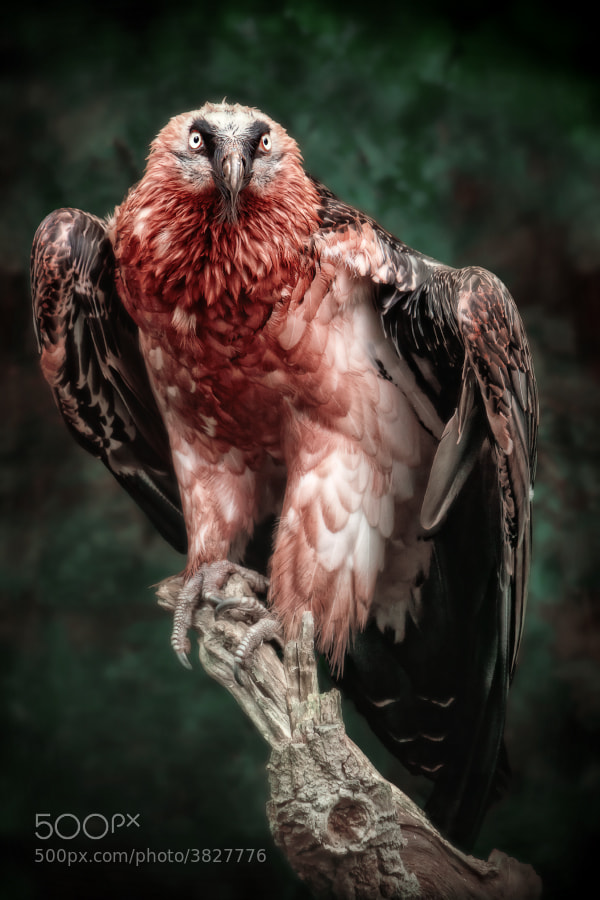
1. Red Bearded Vulture

Vultures tend to have a bad reputation, but we Green Monsters love nature’s clean-up crews! The red bearded vulture is the largest of birds in the Alps. Native to over 23 Eurasian countries, these beautiful birds were once known as “bone eaters” because they are the only animals whose diet consists primarily of bone!
The bearded vulture has been historically feared due to the bird’s immense size and it was believed the vultures were responsible for attacking lambs and small children (no longer believed to be true). These birds were hunted and poisoned to be eradicated from the Alps. It is estimated that there are between 2,000 and 10,000 individuals left in the world today. Current threats include collisions with power lines, human disturbance, habitat degradation, accidental poisoning, and illegal hunting.
Examples of How You Can Help
- See what the World Wildlife Fund (WWF) is doing to protect these species! Spread awareness and/or make a donation.
- Check out the Bearded Vulture Conservation Project and find out how you can get involved.
- Help end vultures’ negative reputations by telling your friends, family, and peers about the importance of nature’s cleanup crews.
- Educate others about the harmful consequences of poisoning animals (even the ones you might think are pesky). Many species are often affected.
2. Blobfish

Aww! Look how sad this poor fish is … perhaps because her/his species is on the endangered list. Or … because this fish was actually trawled from a depth of over 300 meters and then brought to the surface, causing the fish to become a gooey pink gelatin-like … blob (Wouldn’t that make you sad?). Located on the coasts of Australia and Tasmania, the blobfish (known more properly and respectfully as Psychrolutes marcidus) can actually exist at depths as deep as 600 to 1,200 meters, where the environment’s pressure is dozens of times greater than sea level.
How is a deep-sea fish endangered? They are so far out of reach from most humans! Like our unfortunate friend in the photo, blobfish are often accidentally (they are inedible) captured by deep-sea trawlers. They are not adapted to swim quickly away from predators, so they are very vulnerable. Whether you think this fish is ugly or not, let’s not judge one for appearances and help out this amazing species!
Examples of How You Can Help
- Sign petitions to spread awareness and take action for all fish species’ protection.
- Tell your friends and acquaintances about deep-sea trawling and why it needs to be stopped.
- Learn ways you can help save the oceans, including the blobfish’s home.
3. Dhole

Are you a dog lover? Ever seen canines like these? If you’re lucky, you might spot a dhole in Eastern or Central Asia. Like other dogs, dholes are playful, social omnivorous beings who live in packs with about five to twelve members. Unlike other dogs, dholes will allow the younglings of their pack to eat first after a kill. These dogs are the only member of the genus Cuon still in existence. Let’s not see them go extinct!
Dholes are considered endangered by the IUCN and the species continues to be threatened by habitat loss, transfer of disease from domestic and stray dogs, and lack of food resources. The dhole’s primary sources of prey are ungulates (pigs, horses, etc) and since many species of ungulates have become extinct or rare to find in Asia, obviously this is a problem for dholes.
Examples of How You Can Help
- Of course, spread the news! It is always important for more people to be aware of the issues of habitat loss and the negative consequences of hunting.
- Sign or create petitions to protect these dogs and other endangered animals through raising more awareness.
- Read about projects intended to conserve wild canine populations and how you can help with their efforts.
- Use the dhole as an example for keeping your companion animals healthy to prevent the spread of disease to and from wild animals.
4. Mantang Narrow-mouthed Frog

Why is there a picture of a penny? Look closer – there’s a frog on it! Commonly known as the “pea-sized frog” (Microhyla nepenthicola), the species was first described in Borneo in 2010. Although adult males are between 10 and 12 millimeters in length, believe it or not, this is not the smallest frog in the world. Paedophryne amauensis stole the record for world’s smallest vertebrate in 2012 at 7.7 mm long!
Although it is difficult to determine the population status of these little beings (since they’re so hard to find), one-third of amphibians are in danger of extinction and are considered to be the most threatened group of animals. Threats include deforestation, Pollution, ecosystem disturbance, Climate change, and disease.
Examples of How You Can Help
- Learn about how and why frogs, as well as other animals are crucial to their ecosystems AND human survival!
- Educate your friends and peers about amphibian conservation.
- Donate to the Amphibian Survival Alliance.
- Take a volunteer vacation for rainforest Conservation.
- Don’t eat frog legs (ewww) and advise others against frog consumption.
- Avoid using pesticides.
- Learn about your environmental impact and how to reduce it.
- Share more One Green Planet posts to your social media sites!
Can Species be Helped if Humans Continue to be Unaware of their Existence?
Sure they can! The animals listed are a very few of the thousands of examples of unique endangered species that need our help. Many species that we care about today gain popularity through movies, media, and the news. For example, few were aware of the deep-sea female angler fish until the movie Finding Nemo was released. But we bet you haven’t seen a male angler fish (Check him out!).
Species such as the Sunda colugo, solenodon, bumblebee bat, hooded seal, Irrawaddy dolphin, Chinese giant salamander, New Zealand weta, and many, many others are all absolutely fascinating endangered beings, but they are receiving little attention. Even if we aren’t aware of species’ existence, we can still help them by doing all that we can to conserve their ecosystems. It’s not too late for those who are endangered, but extinction is irreversible. We humans need to remember that we don’t own this amazing world; we share it. We have so much more to learn about the Earth and all its species yet to be discovered. So let’s not ruin it for all of us…let’s take action and prevent extinction!
Image source: AfricaGeographic.com
Discover Our Latest Posts




Comments:
Leave a Comment
You must be Login to post a comment.
Why show a pic of a pangolin behind the headline, and then not discuss the pangolin?
Did you read the introduction?
All these wonderful, unique and rare animals mentioned above are lovely, unusual creatures. Once they disappear from the Earth, that\’s it !!!
I ask the governments of the countries in which these animals reside to enact legislation to protect them for all of us. It\’s not much to ask….. these animals should not be hunted to extinction on the basis of some primitive belief of health benefit from eating or using body parts
These animals and birds could boost a country\’s tourism and revenue, by having controlled, protected sanctuaries, where they can be seen and learned about by all.
They certainly should be protected by law for us all.