
Vegan Recipe App
T-Shirts for Activists
Newsletter
Ad-Free Browsing
Cookbooks
Petitions
Product Features
Adopt-a-Pet
Get thousands of vegan, allergy-friendly recipes in the palm of your hands today!
X
Get your favorite articles delivered right to your inbox!
X
4.2K Views
11 years ago
Banksy’s Orca Leaping Out of a Toilet Bowl at ‘Dismal Land’ Is Possibly the Best Anti-SeaWorld Art Created
Banksy, the renowned anonymous street artist just launched his biggest show to date. The project titled “Dismal Land,” a “Bemusement Park,” has been staged in a run-down site home to a former outdoor pool in southwestern England’s Weston-super-Mare and includes works from Banksy, as well as art galleries featuring some 50 international and British artists including Damien Hirst, Jenny Holzer, David Shrigley, James Cauty, and other lesser known artists.
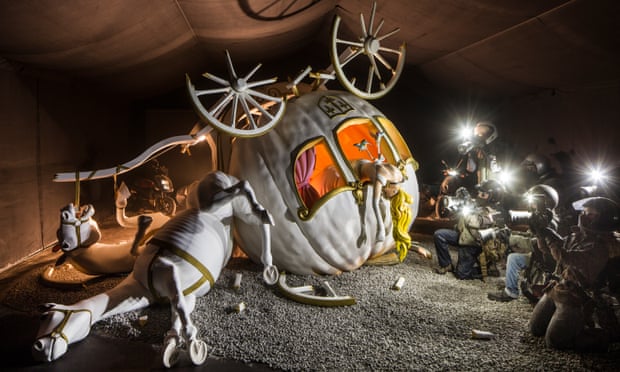
Dismal Land features dark, amusing exhibits like a sculpture of a woman attacked by a cloud of seagulls, a pond where visitors can steer model boats crammed with migrants, and a dead Cinderella hanging out of her crashed pumpkin carriage surrounded by paparazzi.
The dystopian theme park also showcases 10 new never-before-seen pieces from Banksy, including this one featuring an orca leaping from a toilet bowl to jump through a hoop, held by a trainer, with a kiddie pool awaiting the whale’s landing.
This simple, yet effective piece of art is yet another powerful punch delivered to the already suffering SeaWorld.
As the film “Blackfish” captured, orcas do not belong in captivity at theme parks like SeaWorld where they are trained to performed ridiculous tricks for our entertainment. In fact, orcas are incredibly social and intelligent animals and living in concrete tanks does not provide them with the stimulation, exercise and enrichment that is naturally offered in the wild.
SeaWorld may attempt to sell us fairy tales of how orcas benefit from doing their shows, longer lifespans in captivity, how larger enclosures is the answer, as well as their conservation and rescue and rehab programs but the truth is orcas are not meant to be confined in concrete pools.
Just think about it … how can it possibly be okay to keep a twenty-thousand-pound orca that is used to swimming an average of 100 miles per day in a concrete tank that is smaller than the parking lot for visitors at SeaWorld? You don’t have to be a cetacean expert to conclude that these majestic animals belong in the open ocean and not in toilet bowls at SeaWorld.
This is the unfortunate reality for captive animals across the board – whether in zoos or marine parks, and to make matters worse, training orcas to perform tricks for our entertainment is literally as unnatural as trying to get a whale to jump out of a toilet bowl into a kiddie pool.
Want to change this? Here’s what you can do …
Get familiar with the facts about the life of Orcas in captivity vs. the wild and spread the word so that marine parks like SeaWorld that keep animals captive for our entertainment eventually become relics of the past.
Featured below are some other iconic pieces of art depicting the sad lives of orcas in captivity.
Discover Our Latest Posts



Sign Up
Newsletter
Get your favorite articles delivered right to your inbox! Sign up for daily news from OneGreenPlanet.
Support
Help keep One Green Planet free and independent! Together we can ensure our platform remains a hub for empowering ideas committed to fighting for a sustainable, healthy, and compassionate world. Please support us in keeping our mission strong.
Viral Articles

7 Homemade Vegan Recipes That Are Great for Wedding Receptions
Read Article

Best Food Dehydrators in 2026: Stainless Steel and Plant-Based Picks for Fruit Leathers, Veggie Chips, and Herbs
Read Article

10 Flippin’ Awesome Raw Sauces
Read Article

Best Pet Water Fountains in 2026: Vet-Backed Picks That Get Cats and Dogs Drinking More
Read Article

5 Best Plant-Based Protein Powders for Everyday Use in 2026
Read Article

15 Plant-Powered Side Dishes to Bring to Your Memorial Day Cookout
Read Article

Plant-Based Diet and Athletic Performance: What the Research Shows in 2026
Read Article

Best Infrared Saunas and Sauna Blankets in 2026: What the Science Says and Which to Buy
Read Article

The Environmental Cost of Fast Fashion in 2026
Read Article

Why Electric Vehicles Are the Smartest Choice for Eco-Conscious Car Buyers in 2026
Read Article
Comments: