
Vegan Recipe App
T-Shirts for Activists
Newsletter
Ad-Free Browsing
Cookbooks
Petitions
Product Features
Adopt-a-Pet
Get thousands of vegan, allergy-friendly recipes in the palm of your hands today!
X
Get your favorite articles delivered right to your inbox!
X
12 years ago
Global Diet is Getting Less Healthful and Less Interesting
Image Credit: Wikimedia Commons
For many global trekkers, a major highlight of travel is the chance to experience new cuisines made with exotic ingredients. Recently, however, world travelers have noted that the food they discover abroad looks strikingly similar to their standard fare back home. India is now full of Subway sandwiches, for example, and Pizza Hut Middle East just debuted a hot dog crust.
As it turns out, the trend extends beyond fast food chains. A new study by researchers at the University of Minnesota, St. Paul has found that national food supplies have become increasingly similar over the last 50 years, with a heavy global emphasis on a few dozen “megacrops.”
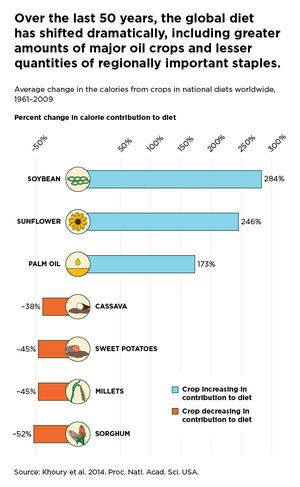
Which crops are hogging all the attention? At the forefront are the standard Western staples, including wheat, potatoes, rice, corn, and dairy. Also prevalent are soybean, sunflower oil, and palm oil, all of which have spiked in recent years. Meanwhile, traditional Asian and African crops like sorghum, millet, cassava, and yam have been pushed aside to make room.
This decreased crop diversity may not sound too terrible, but the findings are in fact considered a major food security threat. There are many reasons for concern. Firstly, a “standard globalized diet” would pose many of the same health concerns as the woefully unhealthy Standard American Diet. This diet is low in essential micronutrients yet increases the likelihood of obesity, heart disease, and diabetes—even in countries where food is scarce.
Another danger of this homogenized diet is the hazard of relying heavily on a few crops. Diverse agriculture can withstand most major threats like disease, drought, and insect infestations. A less diverse range of crops is therefore more vulnerable, making a global food crisis more likely.
What can be done to correct this global issue? One suggestion is to boost the production of locally grown crops and increase the genetic diversity of major crops. For consumers, celebrate diversity in diet and beyond! Buying and supporting an array of local crops is a great way to battle a boring, homogenous diet.
Image Source: Wikimedia Commons
Discover Our Latest Posts


Sign Up
Newsletter
Get your favorite articles delivered right to your inbox! Sign up for daily news from OneGreenPlanet.
Support
Help keep One Green Planet free and independent! Together we can ensure our platform remains a hub for empowering ideas committed to fighting for a sustainable, healthy, and compassionate world. Please support us in keeping our mission strong.
Viral Articles

26 Incredible Dairy-Free Cheesecake Recipes. No Oven Necessary!
Read Article

7 Homemade Vegan Recipes That Are Great for Wedding Receptions
Read Article

Best Food Dehydrators in 2026: Stainless Steel and Plant-Based Picks for Fruit Leathers, Veggie Chips, and Herbs
Read Article

5 Easy Ways to Incorporate Anti-Inflammatory Foods in Your Diet
Read Article

10 Flippin’ Awesome Raw Sauces
Read Article

Don’t Fear the Carbs, Try These 15 Recipes Instead!
Read Article

15 Bowls Packed With Seasonal Veggies, Grains, and Fantastic Flavors
Read Article

Best Pet Water Fountains in 2026: Vet-Backed Picks That Get Cats and Dogs Drinking More
Read Article

We Promise You Won’t Get Bored of Summer Salads With These 15 Recipes
Read Article

5 Best Plant-Based Protein Powders for Everyday Use in 2026
Read Article
Comments: