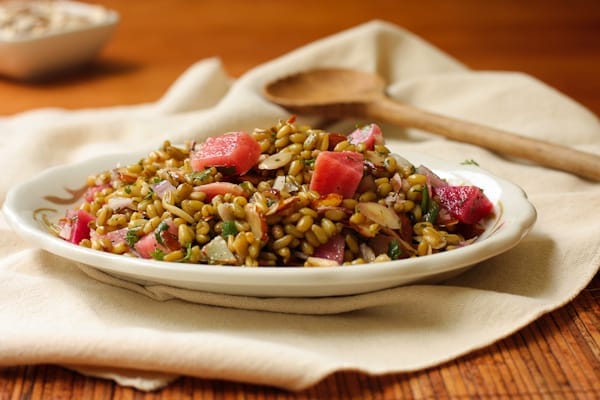
Freekeh Salad With Beets, Cilantro, and Lime [Vegan]
Dried, roasted and toasted....Freekeh is the hot new grain!
At first glance, it might look like wheat berries or barley. But get closer and take a whiff. You might smell toasted nuts, or even the faint remnants of a campfire. This is freekeh, the latest in ancient grains. The aroma is not surprising, considering that after being harvested, freekeh is dried in the sun and then set on fire, burning the straw and chaff.
Freekeh is native to Lebanon, Jordan, Egypt and Syria, but it’s becoming increasingly popular in the U.S., especially among health-conscious consumers. Freekeh retains more of the protein, vitamins and minerals than other grains, because the wheat is harvested while it is still green and immature. Freekeh is low on the GI index, and contains up to four times the fiber of brown rice. But it’s not only health food freaks who are flocking to freekeh. Chefs at top restaurants are also adding it to their menus. John Adler, a chef at Franny’s in Brooklyn, sings the praises of freekeh: “We add roasted and raw vegetables, nuts, cheese, herbs, and a good amount of oil and vinegar. Yet despite all that, you can still taste the grain. It has a really good integrity.”
Even though freekeh is already roasted, Franny’s chefs give the grain a second toasting in their wood-fired oven before cooking it. “It has almost a coffee-like flavor at that point,” says Adler. The restaurant’s staff has been known to nibble on freekeh right from the oven after it’s toasted. Home cooks can give it the same toasty treatment by briefly putting it under the broiler.
Across the globe, Kamal Mouzawak , founder of Souk al Tayeb – Beirut’s first farmer’s market – also sings the praises of freekeh, calling it a “a real delicacy.” At Tawlet, the market’s “farmer’s kitchen,” individual producers whip up buffets of dishes typical of their village or region. Mouzawak explains that the grain has only recently become well known outside of southern Lebanon, adding that “freekeh is always on our menus for southern villages.”
While Mouzawak prefers his freekeh cooked as a plain grain and served with vegetables, American cooks tend to favor using it in salads with Middle Eastern flavors. Here’s a delicious salad recipe that takes freekeh in yet another direction. Southwestern Freekeh? Why not.
Other books you may be interested in

In this epic cookbook, you'll find the most amazing plant-based burger recipes featuring whole-food, plant-strong ingredients like tempeh, mushrooms, and chickpeas!

These plant-based summer meals focus on seasonal produce like peaches, watermelon, berries, zucchini, and tomatoes. They will show you the many ways to use fruits and vegetables in your vegan dishes this summer!

The recipes in this book were curated with health in mind to allow your body to detox naturally without feeling bloated or uncomfortable after eating.

From chocolate classics like chocolate chunk brownies and chocolate chip cookies to decadent delights like Vegan Ferrero Rocher Truffles and dreamy chocolate mousse, this cookbook has something for everyone!

Make the most of the chilly winter season with these 75 comforting home-cooked, plant-based, vegan meals designed to warm your body and soul. This winter vegan cookbook will make you look forward to snuggling up by the fireside with family and friends!

From brownies and bars, to truffles, cheesecakes, and beyond, you can whip up mouthwatering desserts without using dairy or eggs! Create new baking traditions with BLISS: Vegan Desserts and Treats to Live Deliciously!

Plant-based recipes for the most magical Christmas ever is a collection of 100 Christmas-inspired recipes! From festive and fancy to quick and easy, these recipes will spark fond memories and inspire you to create new family traditions!

The ultimate Fall cookbook is here! Featuring an exciting collection of festive recipes that capture the spirit of fall